Showing posts with label photojournalism. Show all posts
Showing posts with label photojournalism. Show all posts
Monday, December 7, 2009
Shooting Reflections

I want to talk about shooting reflections for today's post. In almost every wedding I shoot I find an opportunity to photograph someone in a mirror. And reflections can be a friend or a foe depending on your lighting and angle. I've mentioned before the concept of angle of incident, but I want to bring it up again here since it is integral to how reflections work. Basically, light hits a reflective surface at an angle (known as the angle of incident) which is equal to the angle in which it bounces off (angle of reflection). The half way point at which we observe these two angles is called the normal. So, looking at the photo above you'll notice that in the mirror both the bride and bridesmaids behind her are visible to the camera. If this same image was taken from the bride's point of view, you'd see not only her bridesmaids 45 degrees to her right, but you'd also see me and my camera 45 degrees to the left. She is standing at the normal point I just mentioned and myself and the bridesmaids are equally distanced from the bride.
That is the key to photographing a reflection without including yourself. You must position yourself at the angle of reflection and your subjects at the angle of incident. (Note: the same equation can be used for the distance between the bride and myself in the shot above, the angle is just smaller.)

Another important part of photographing a reflection is depth of field. You have to chose very carefully what you want to include and what you don't. A shallow depth of field will look good with images designed to show the reflection only and not the person. In shots like the one above, a larger aperture would be best so information in the dress, and mirror are sharp. You should also keep in mind that the sharpness of the image will depend on the reflective surface and most of the time reflections are slighting soft focus by nature. Also, do your best to not focus on the glass itself, otherwise your image will just show the dust and finger prints on the surface of the mirror.
Finally remember that images (like the one above) need to say something. Reflections carry a story telling property that when used correctly they covey a message. Psychologically we associate reflections with an outward manifestation of what lies within. It's important when trying to tell a story in an image to be specific in your intent. Your audience will naturally infer many different levels into an image and provide a personal interpretation. Photojournalism, especially in wedding photography, is a way of communicating and when it's done with precise graphical language it can make for visually striking images and happy customers!


Thursday, November 26, 2009
Photojournalism: A Thanksgiving in pictures
Today's post is the story of my Thanksgiving. I decided that the best way to capture it would be in the style of a photojournalist. This is the style of photography I use at weddings primarily. Photojournalism is about saying something without words. Telling a story that is honest and insightful. Technical proficiency is required to create great images that also convey a variety of emotions. A photograph becomes more then a snap shot when you can control the light, design the frame, and convey a message about the human experience simultaneously. This ability is what makes a professional photographer an artist in their own right. And telling stories is the reason I picked up a camera in the first place. So I'm hoping these photos from our Thanksgiving will speak for themselves and share with you the people that I thank God for everyday.

Alexander (my son at 2-1/2 weeks)

Cody (our dog) and Audrey at breakfast


Lyndze, my niece.

Malorie, my neice.


Left to right: Katielynn (younger sister), Terice (youngest sister)


(Harry is the only person I know that owns a "Garfield: The Movie" T-shirt and will unashamedly wear it in public.)


Katielynn, Terice, Vonda and Alex

All images were shot with Nikon D300, 16-85mm lens ISO 200. SB900 ans SB 800 speedlights positioned around the room in multiple locations and flash bounced off the ceiling for over all fill. SB900 set to manual full power and SB 800 to TTL +3.0 stops to create direction and allow for low ISO rating. Average exposure: 1/80 @ f4.5 .

Alexander (my son at 2-1/2 weeks)


Audrey making rolls for Thanksgiving dinner with me.

Tyler (left), Caleb (right) and Alex (lower right)

Lego Pirate (left) Tyler (right)


My Father, Terry


Left to right: Taylor (Niece), James (Best thing that ever happened to Terice)


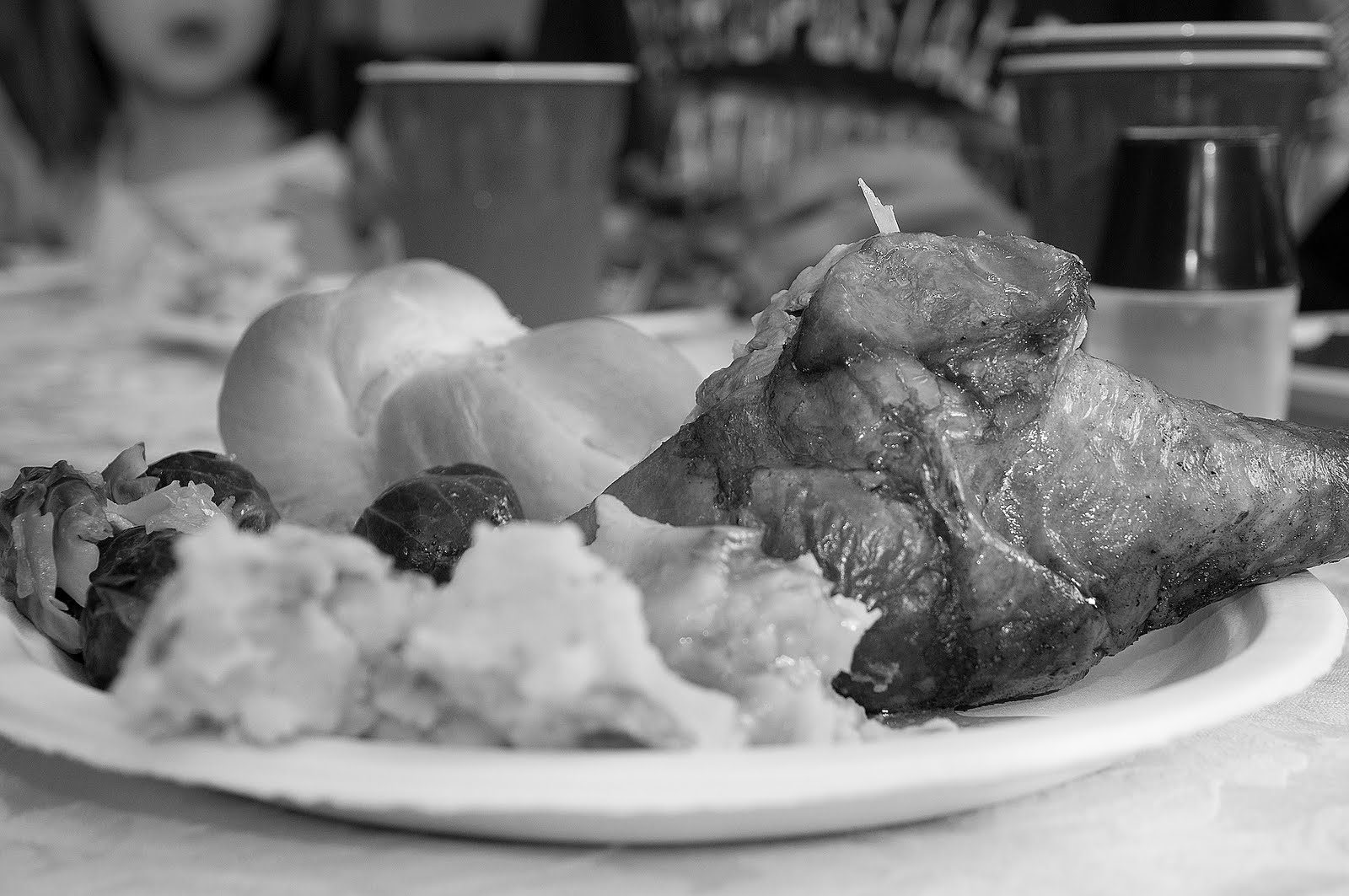


All images were shot with Nikon D300, 16-85mm lens ISO 200. SB900 ans SB 800 speedlights positioned around the room in multiple locations and flash bounced off the ceiling for over all fill. SB900 set to manual full power and SB 800 to TTL +3.0 stops to create direction and allow for low ISO rating. Average exposure: 1/80 @ f4.5 .
Subscribe to:
Posts (Atom)